
Coming this November
National Launching
of
TrainLOKAL
From Volume to Value: Empowering LGUs to Drive Skills, Jobs, and Local Growth
November 19, 2026 7:00 AM–4:00 PM GMT+8
Program Flow & Venue
Join national and local leaders at the Tarlac City Civic Center (Gymnatorium) as we formally roll out TrainLOKAL.
Official Schedule of Activities
November 19, 2026 · Chronological Sequence
Arrival and Registration
Registration of delegates, issuance of official kits, and morning reception.
Opening Preliminaries
National Anthem of the Philippines, Invocation, and TESDA Hymn.
Welcome Remarks
Welcome address by the host governor of the Province of Tarlac.
Formal Launching of Train LOKAL
Keynote presentation of TESDA Circular No. 024, S. 2026: Localized Opportunities for Knowledge Access and Lifelong Learning.
Introduction of the President
Introduction of the Guest of Honor and Keynote Speaker.
Presidential Message and Ceremonial Participation
Keynote message by the President and ceremonial launch of the TrainLOKAL national implementation.
Pledge of Commitment
Expression of solidarity and formal pledge of commitment from Regional LGU Leaders, PESO managers, and TVET stakeholders.
Photo Opportunity
Official photo session with the President of the Philippines, Cabinet secretaries, provincial governors, and key partners.
Tarlac City Civic Center (Gymnatorium)
Macabulos Drive, San Vicente, Tarlac City, 2300 Tarlac
GPS: 15.5145° N, 120.5663° E
Delegate Reminders
- ✓ Registration: Starts promptly at 7:00 AM. Present confirmation QR or Gov ID.
- ✓ Attire: Smart Casual
- ✓ Parking: Designated LGU Delegation Parking Slots Beside and Behind the Gymnatorium

LOKAL
Localized Opportunities for Knowledge Access and Lifelong Learning
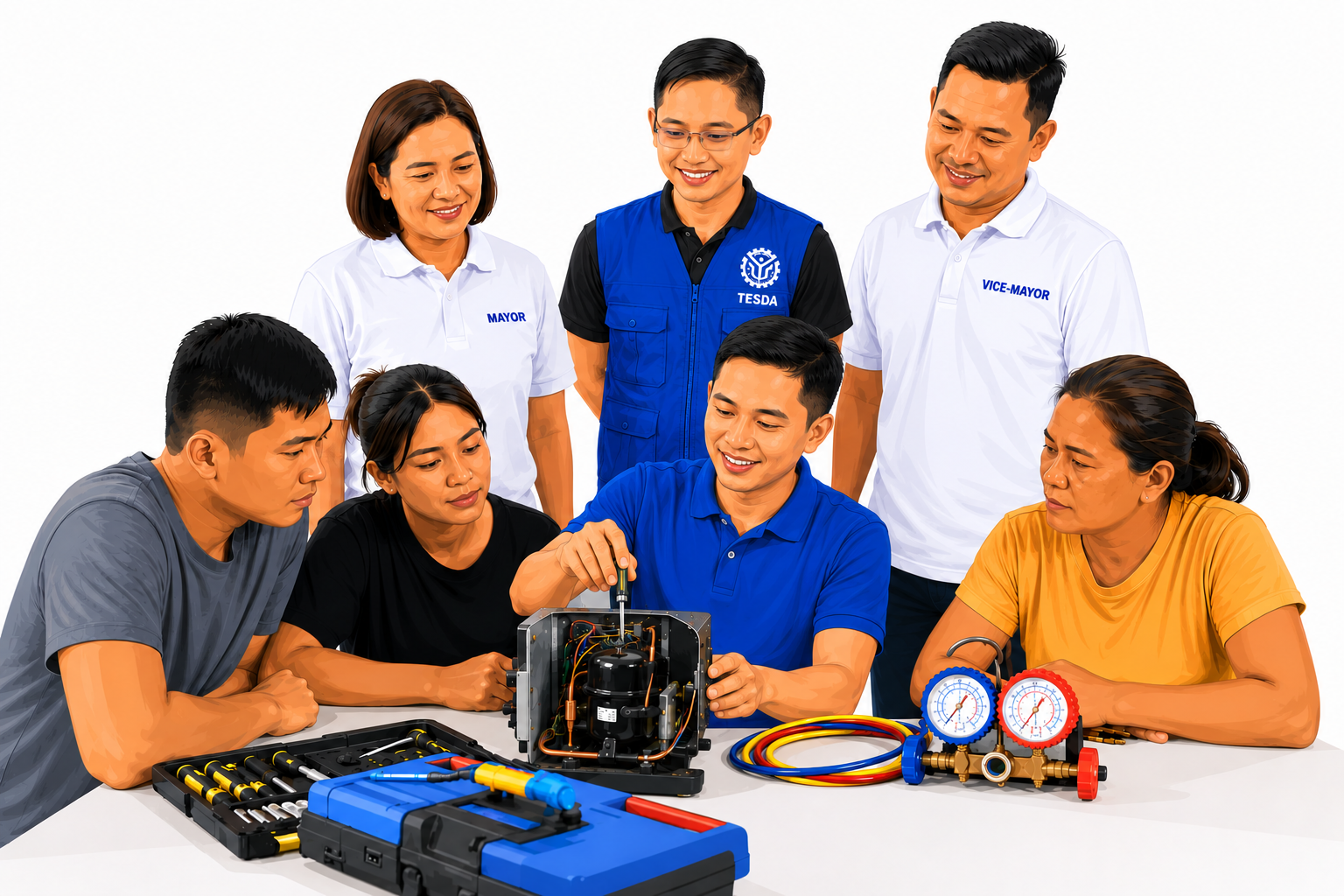
From Volume to Value:
Empowering LGUs
To Drive Skills, Jobs, and Local Growth
Build a Skilled and Job-Ready Workforce for Local Growth
Local Government Units are in a strategic position to create meaningful opportunities for their constituents by investing in skills development aligned with local needs, industries, and livelihood opportunities.
Through LGU-led skills training, communities can build a stronger workforce, support local enterprises, and expand access to employment and livelihood.
When LGUs lead skills development, communities gain better opportunities for growth.

Ways LGUs Can Participate
TRAIN LOKAL adopts a flexible, readiness-based approach. LGUs may adopt one or a combination of arrangements.
Integrated Local TVET Ecosystem
Coordinated planning among the LGU, TESDA, training providers, schools, industry, and local partners.
Community-Based Training Practice
Localized training in barangays or community venues for priority and underserved groups.
LGU-Managed Scholarship and Subsidy
LGU-funded scholarships, training subsidies, or cost-sharing for residents enrolled in TESDA-registered programs.
Specialized Skills Hub or Innovation Center
Sector-focused training linked to innovation, product development, entrepreneurship, and local industry needs.
Multi-Stakeholder Partnership Practice
Shared funding, facilities, equipment, expertise, and employment support among the LGU and partner institutions.
LGU-Run Training Center
LGU-operated facility with dedicated personnel, equipment, budget, and TESDA-compliant programs.
Parameters for Determining LGU Readiness
TESDA looks at practical conditions that show how an LGU can start, strengthen, or sustain LGU-led skills training.
Local Governance and Policy Support
TVET is reflected in local plans and budgets, supported by functional councils, clear focal persons such as CTECs, and local policies or issuances.
Resources, Facilities, and Support
The LGU has funding, assigned personnel, usable venues or facilities, equipment and materials, logistics, and actual support to skills training.
Partnerships and Local Ecosystem
LGU offices coordinate internally and work with TESDA, SUCs/LUCs, training providers, industry, employers, and community partners.
Implementation and Results Tracking
Training is guided by LMI and ABDD priorities, follows TESDA standards, links learners to assessment, certification, employment or livelihood, and tracks results.
Readiness is not a pass-or-fail test. It guides the right Train LOKAL arrangement and the level of TESDA support.
Benefits for LGUs
Through Train LOKAL, LGUs can:
- Address unemployment and skills gaps
- Support local industries and MSMEs
- Promote entrepreneurship and livelihood
- Strengthen youth employment opportunities
- Improve local investment attractiveness
Across the Philippines
Community highlights
See skills and local initiatives in action through stories from our partner communities.
Region II
Solana
The Municipality of Solana, Cagayan, in partnership with TESDA, empowers residents through accessible technical-vocational training and skills development. Through community-based programs, livelihood support, and strong partnerships, the initiative helps individuals gain skills, create opportunities, and build sustainable livelihoods.
From Priority to Implementation
Your CTEC: The LGU's Frontline Coordinator for Skills Development
Community Training and Employment Coordinators (CTECs) help turn your LGU's skills development priorities into action.
Identify priority skills and align training with local needs.
Connect TESDA, PESO, industry, training providers, and other partners.
Assist in community mobilization and inclusive program delivery.
Monitor training results and help improve programs.
Connect graduates to employment, livelihood, assessment, and certification.
TESDA as Partner in Quality Skills Training
When your LGU is ready to strengthen local skills development, TESDA can provide technical assistance, workforce planning support, trainer and assessor development, standards, certification, quality assurance, capacity building, monitoring, and implementation support.
Scan the QR Code
Advocacy materials
TESDA TrainLOKAL brochure and reference materials
LGU Led Skills Playbook
Step-by-step guide for LGU-led TVET implementation
Start the conversation
Ready to explore Train LOKAL for your community?
Connect with your TESDA Provincial or District Office to discuss local priorities, readiness, and the arrangement that fits your LGU.